
Non Toxic Throw Pillows
The best organic throw pillows are filled with GOLS-certified organic latex, kapok, or down feathers, and are encased in GOTS-certified organic cotton. OEKO-TEX certified polyester works well as a hypoallergenic non-toxic decorative throw pillow option, too. Since they’re in the room you likely spend the most waking time in, choosing couch pillows made with safe materials is smart. I rate insert filling, encasement, and cover materials they’re made of using consistent scales explained in my full methodology.
By Dr. Meg Christensen | Physician-founder of Interior Medicine, a non-toxic home resource built on her background in medicine, biochemistry, epidemiology, and clinical research.

Updated August 25, 2026
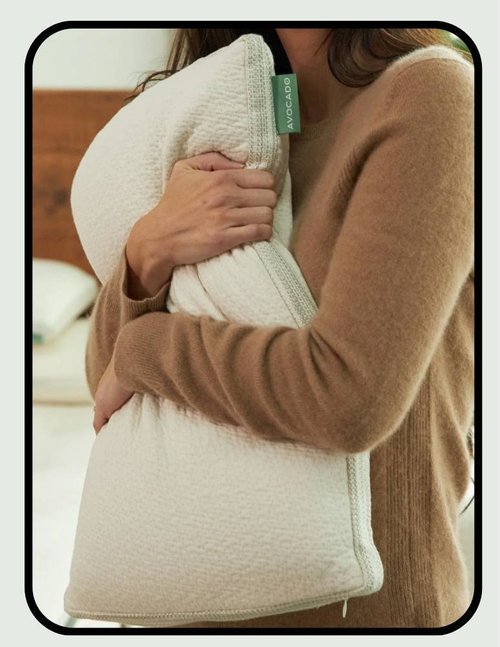 Avocado Latex and Kapok Organic Throw Pillow
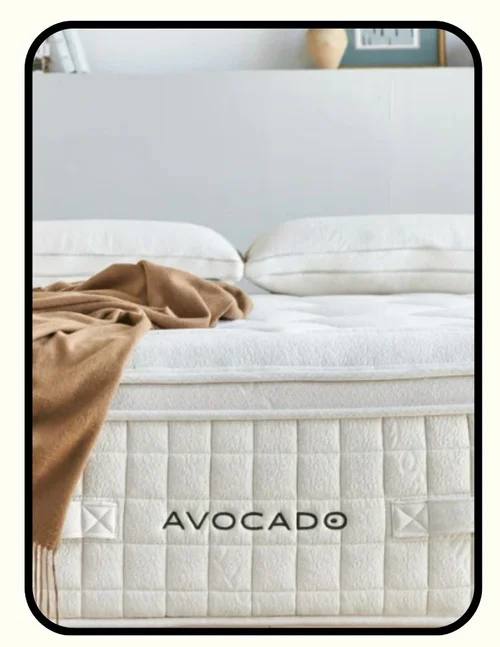
The mini pillow from Avocado is perfect as a non toxic throw pillow insert. Latex is a fantastic alternative to polyester pillow inserts because it's springy and supportive, but actually organic. Their latex has GOLS certification verifying it's truly organic, and is blended with GOTS certified organic kapok, a fluffy fiber. It's encased in a GOTS certified cotton outer shell, and matching sized pillowcase choices to go with them. I have two of these and they haven't lost their shape at all over 5 years. I use them as couch pillows most of the year, and take them with me when I travel.
Product rating
See the rating scales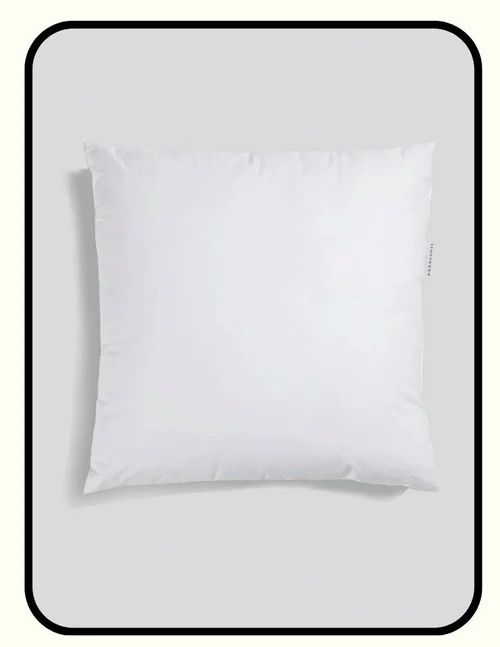 Parachute Natural Cotton and Down Couch Pillows
Parachute's natural feather and down couch pillows are encased in 100% cotton and are OEKO TEX certified. They use responsible RDS certification for their feather and down filling, at a 5% down, 95% feather ratio. They have a rotating cast of merino, linen, and cotton covers that you can swap out seasonally. I use these on my couch and as a sinking-in layer for reading in bed.
Product rating
See the rating scales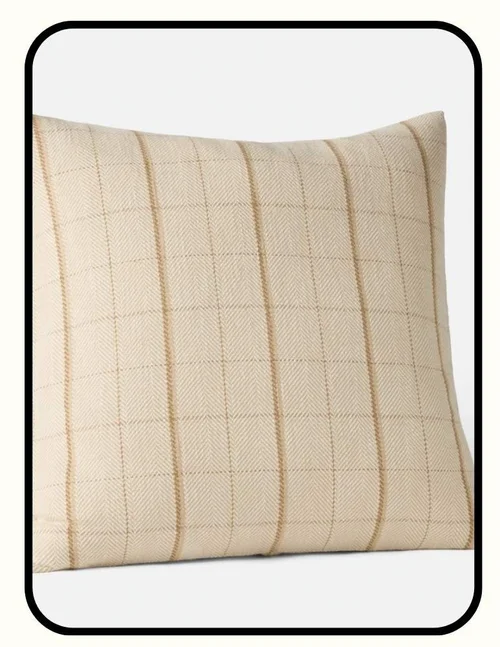 Coyuchi Organic Decorative Pillows
Coyuchi has the best non toxic decorative pillow selection available. They offer GOTS certified organic linen throw pillow covers: it's hard to find truly organic linen, so this sets them apart. They also offer natural cotton and alpaca blend covers, too, with various GOTS and OEKO TEX certifications. Their inserts are made with a blend of 10% down and 90% feathers, offering support and a little more loft than usual. These are encased in a down-proof GOTS certified organic cotton shell.
Product rating
See the rating scales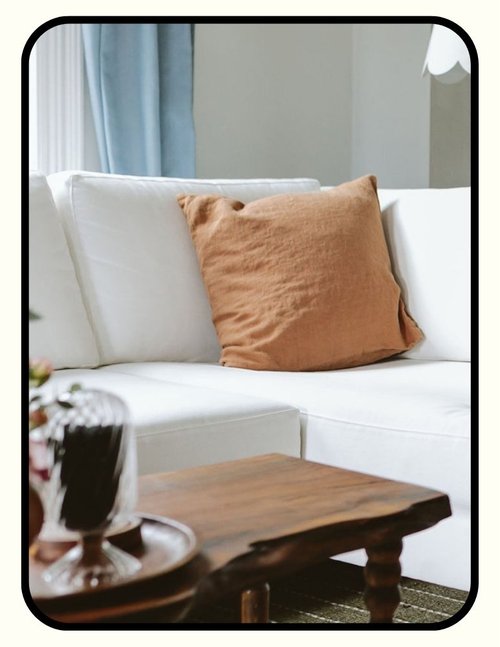 Magic Linen Throw Pillowcases
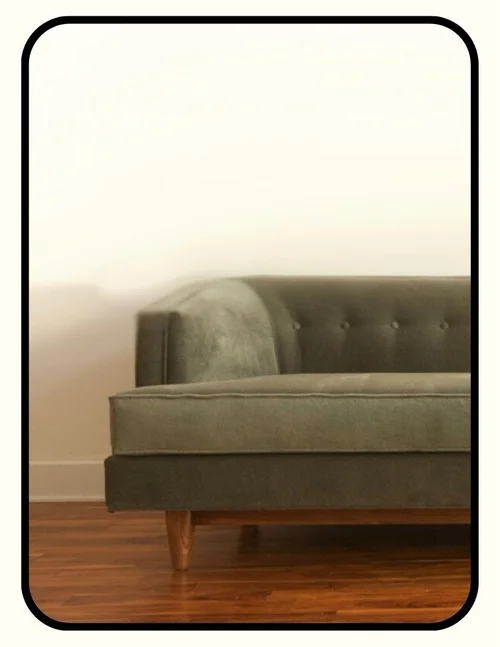
If you already have an insert, Magic Linen makes the best OEKO TEX certified natural linen pillow cases for your couch in many solid colors and prints. Their linen is durable, woven at a much heavier weight (190-280gsm) than most other brands, meaning they'll last a very long time. I have several colors and sizes, including the cinnamon color on my couch above, and they get softer with every wash.
Product rating
See the rating scalesDon’t see what you’re looking for? Request a review, or check it yourself in seconds with the Second Opinion Product Checker. Spot something outdated? Let me know and I’ll update it. Join the spam-free newsletter for interesting info and to hear when new reviews are up.
FYI, “non-toxic” has no official definition, so I rate every product with the same method. It’s built on third-party certifications and published test data, not brand claims. For a deeper dive, my free course walks you through it.
Everything on Interior Medicine is educational information, not medical advice. Read my full disclaimer.
More Healthy Design For You
How Interior Medicine Rates Throw Pillows
"Non-toxic" has no legal or scientific definition, so it's become a marketing word. I still think a healthier home is worth working toward, and the way to get there is with a consistent system. Every product on Interior Medicine is rated with the same method, based on its materials, ingredients, and third-party certifications. This makes it easier to compare products fairly, spot healthwashing, and make informed decisions.
The rating card under each product shows its Material Health. Every material is rated on its own scale, from Healthiest to Harmful, and each brand is rated on the healthiest option it offers. Differences between models are noted in the description.
The guides show what qualifies for each tier, what to look for, and what to ask a brand.