
Organic and Non Toxic Bath Towels
Are organic bath towels worth it? Yes: GOTS certified organic and OEKO-TEX certified cotton or linen towels are better for your skin than polyester or conventional cotton, and quick-drying towels also keep your bathroom healthier by resisting mold and mildew. I evaluate organic and non-toxic bath towels using the same material health scales I apply to every product category, all explained in my full methodology.
By Dr. Meg Christensen | Physician-founder of Interior Medicine, a non-toxic home resource built on her background in medicine, biochemistry, epidemiology, and clinical research.

Updated September 9, 2026
Fast-Drying Non-Toxic Towels
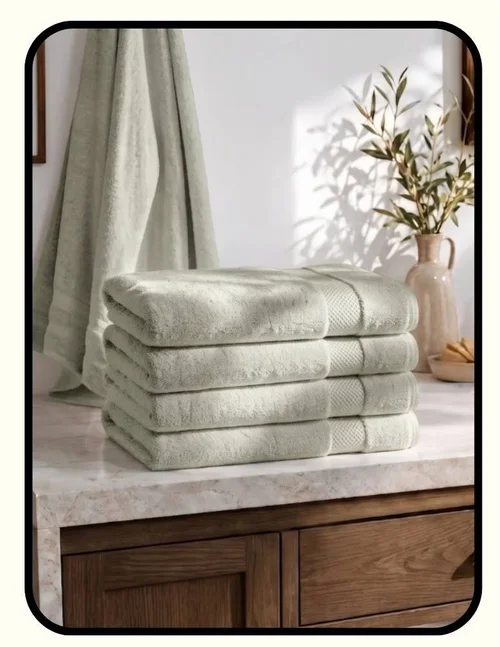 Delara Affordable Organic Bath Towels
These are the most affordable organic bath towels, made with GOTS certified organic cotton. They’re plush and absorbent with a more traditional terry look, but also dry quickly because of the way they’re woven: a “zero twist” weave means the loops are open and remain fluffy, with lots of surface area to dry. I really appreciate how transparent and explanatory they are with their material certifications. Impressive! These come in lots of colors.
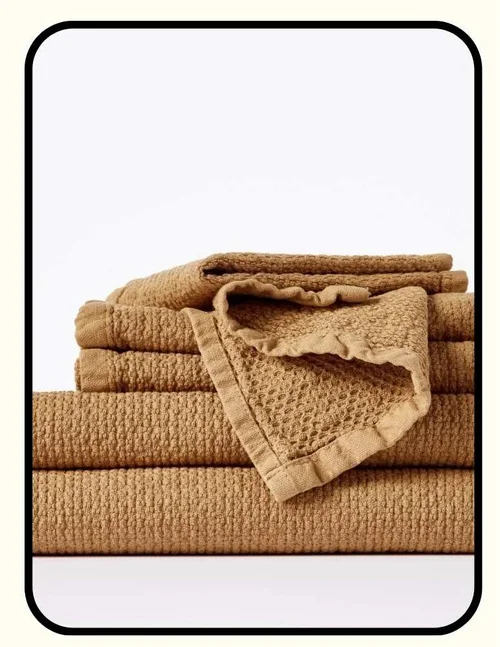 Coyuchi GOTS Organic Cotton Waffle Bath Towels
Coyuchi’s waffle-like towels are made of 100% organic GOTS certified cotton, important for one of the fabrics in closest contact with your skin every single day. They use a waffle-style high/low weave, so they won’t snag and stay durable. These are made of Turkish cotton, which is soft due to the fibers being long. If you’re used to drying off with plush terry towels, these will feel different! But, if you like lightweight bath sheets, these do absorb well, especially after breaking them in with a wash cycle. They dry quickly, too, resisting mustiness and mold for a fresher-smelling and healthier bathroom.
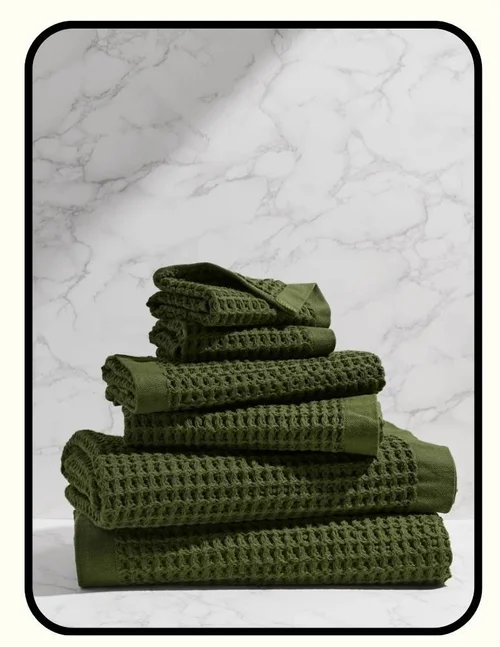 Onsen OEKO TEX Certified Waffle Bath Towels
Onsen’s OEKO TEX certified cotton waffle towels are so durable. I have two sets; one in Oatmeal and one in Forest, and they’re great: no snagging and have kept their color and springiness for years and years. They dry quickly, even in my humid small bathroom.
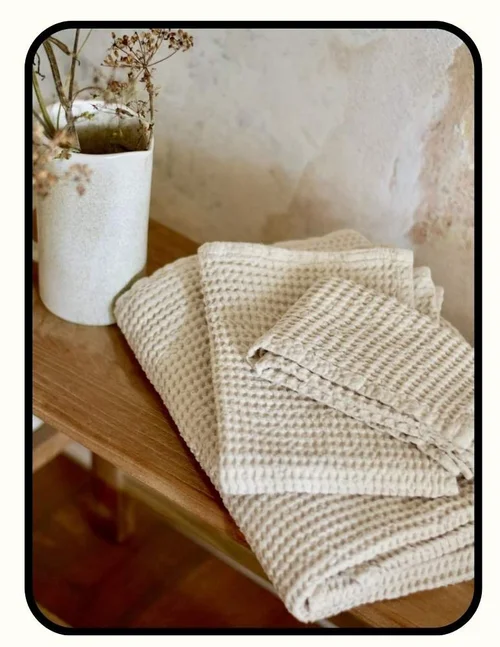 Magic Linen OEKO-TEX Certified Linen Cotton Blend Waffle Bath Towel Set
Linen is one of the fastest-drying natural fibers, and a true waffle weave makes the fastest-drying towels. Magic Linen combines both concepts, making these springy and soft non-toxic towels that can help keep even a small, humid bathroom fresh smelling. They’re a blend of OEKO-TEX certified linen and cotton, which I always recommend for fabrics that are in such close contact with your skin. These come in a set, with a bath towel, hand towel, and washcloth. As always, Magic Linen has both neutrals and lots of great colors to choose from.
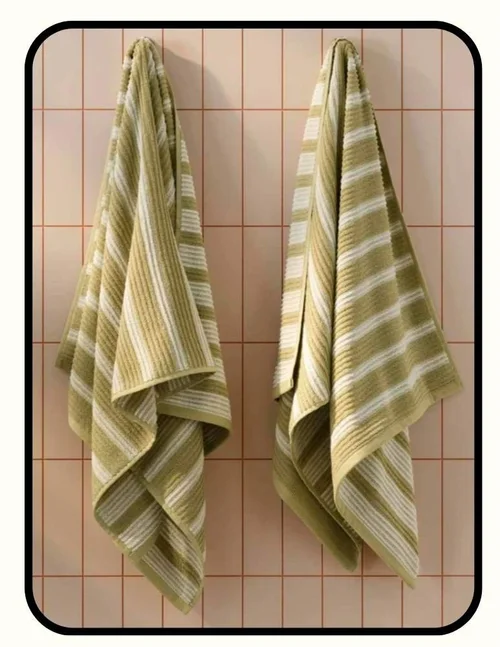 Brooklinen OEKO-TEX Cotton-TENCEL Blend Towels
Tencel towels are newer on the scene, and I’m glad to see these ones by Brooklinen are blended with cotton and meet OEKO-TEX Standard 100. Tencel is a semi-natural semi synthetic fiber made from eucalyptus, and the advantage it has over all-natural towels is that it absorbs a lot of water quickly, more so than cotton, and is very smooth. It dries relatively quickly, and doesn’t have the bacteria-attracting drawbacks that polyester does (read more below.) In short, it works well in a towel.
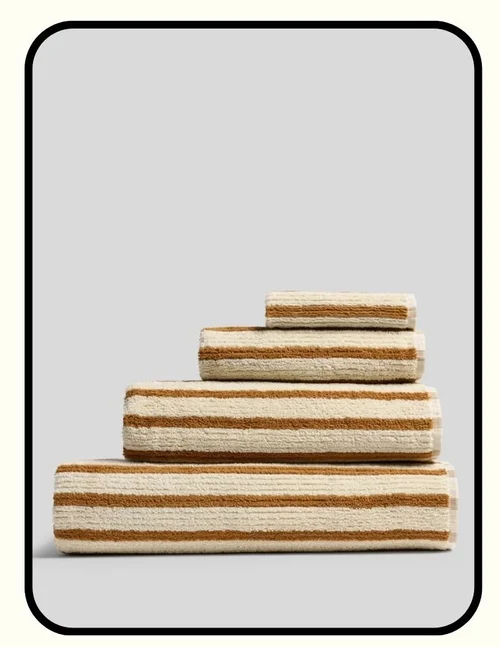 Parachute Organic Towels
Of Parachute’s organic towels, the Resort Stripe line is the best. They’re GOTS organic, meaning the fibers don’t just start organic, but end that way too, with safe processing. They’re also their highest rated organic towel option for durability and softness, and even though they’re plush, they dry faster than average because of their weave type. They come in a few really nice colors and stripe patterns, not just neutral!
Plush Organic & Non-Toxic Towels
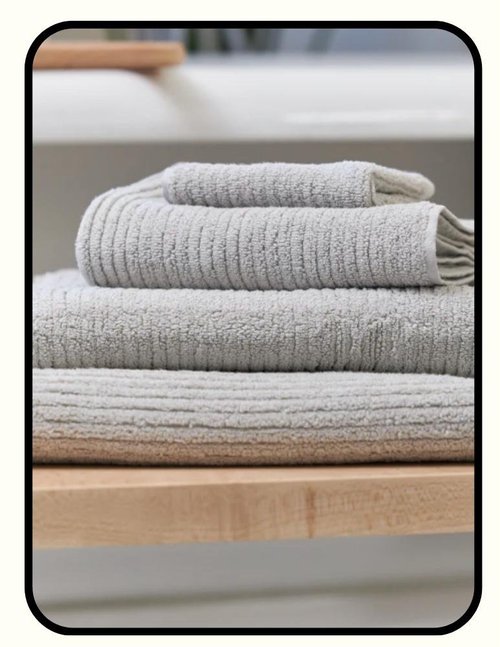 Avocado GOTS Organic Plush Towels
Not everyone needs fast-drying towels! If you have a bathroom with well controlled humidity or live in a warm, dry place, you can use plush towels without thinking twice about dry time. Avocado has GOTS organic cotton towels in a dense, heavyweight weave that’s noticeably plusher than most. That means they’re durable, dense, and feel more luxurious than standard, with organic standards for better health built in. I always appreciate Avocado’s material transparency. Come in a few neutral colors, all with the ribbed texture.
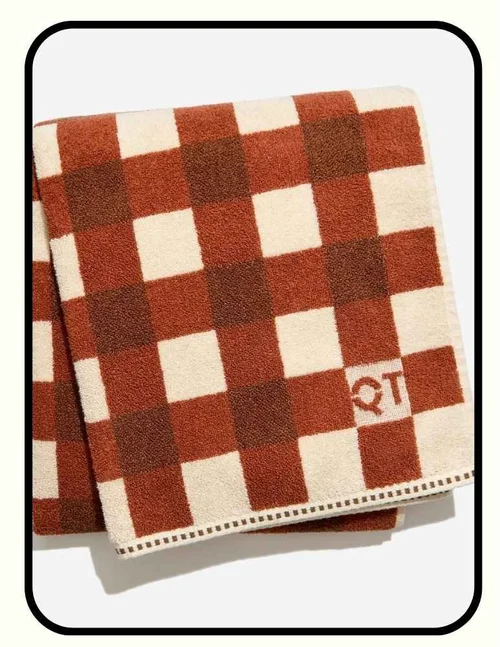 Quiet Town Colorful Organic Bath Towels
Quiet Town makes GOTS organic cotton towels, in a relatively high weave density too, but what sets them apart is their great design and color ways. They also come exclusively in bath sheet size, which is larger than a standard towel, and feels more spa-like. Plush as well, these are best in dry bathrooms with good air flow.
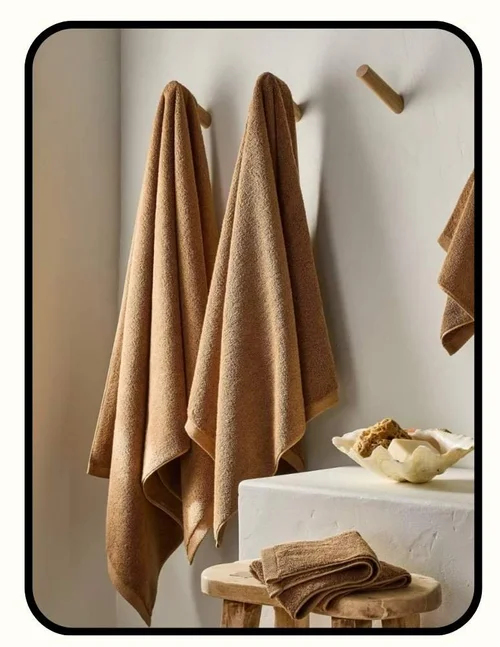 Target Casaluna Organic-ish Towels
Does Target sell organic towels? Not as far as I can tell, though these are close. Casaluna's towels definitely have OEKO TEX certification (I checked in the OEKO TEX Label Check Database) and though they state that they're GOTS certified, I can't find any evidence that that's true. It's possible that they're made with GOTS certified organic fibers but don't have certification on the final product. The tell is that the main description says GOTS, but the detailed description and answers to FAQs only have the OEKO TEX certificate number, and I can't find them in the GOTS database anywhere. Marketing! Still, though, OEKO TEX is a step above standard, these are very highly rated for being durable, and they're very affordable.
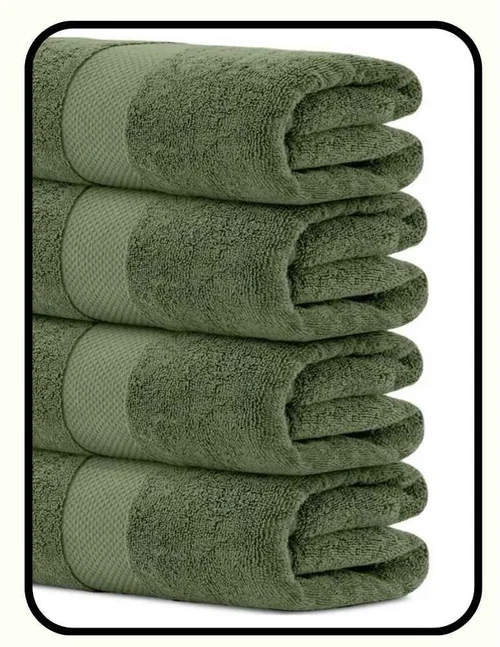 Target White Classic Cotton Bath Towels
Target carries very affordable 100% cotton towels that are very highly rated for being durable and have OEKO TEX certification. While not organic, this still means they're much safer for direct contact with your skin than standard towels. The brand is White Classic, though they come in many colors. These are made with heavyweight cotton so are plush and definitely suited best for well-ventilated bathrooms.
Don’t see what you’re looking for? Request a review, or check it yourself in seconds with the Second Opinion Product Checker. Spot something outdated? Let me know and I’ll update it. Join the spam-free newsletter for interesting info and to hear when new reviews are up.
FYI, “non-toxic” has no official definition, so I rate every product with the same method. It’s built on third-party certifications and published test data, not brand claims. For a deeper dive, my free course walks you through it.
Everything on Interior Medicine is educational information, not medical advice. Read my full disclaimer.
More Healthy Design For You

How Interior Medicine Rates Bath Towels
"Non-toxic" has no legal or scientific definition, so it's become a marketing word. I still think a healthier home is worth working toward, and the way to get there is with a consistent system. Every product on Interior Medicine is rated with the same method, based on its materials, ingredients, and third-party certifications. This makes it easier to compare products fairly, spot healthwashing, and make informed decisions.
The rating card under each product shows its Material Health. Every material is rated on its own scale, from Healthiest to Harmful, and each brand is rated on the healthiest option it offers. Differences between models are noted in the description.
The guides show what qualifies for each tier, what to look for, and what to ask a brand.
FAQ: What Makes Bath Towels Non-Toxic
Table of Contents
What is the Best Non-Toxic Towel?
The best non-toxic towel is made of third party certified GOTS organic cotton or linen, and dries quickly, reducing chances of microbial build-up. The towels listed above have these properties.
GOTS certified organic fibers are important because fabric processing is very chemically intensive. A fiber that starts organic can be dyed with harsh dyes, or have coatings like silicone or stain-resistant treatments added to it for plushness on the shelf. GOTS is a certificate that ensures that these aren’t added and that the finished product remains safe for human health. OEKO TEX certification is second best; if a towel starts with organic fibers, this still holds it to the second-highest standard for human health, excluding the use of carcinogenic azo dyes, PFAS treatments, and is useful when considering non-natural fibers like Tencel.
Fast drying time is important because it gives bacteria, mildew, and mold less of an opportunity to stay and proliferate on a towel. This also means less musty odor and a cleaner bathroom. Read more below about what grows on towels, how much you actually need to worry about it, and how to keep them clean.
What is the fastest drying bath towel material?
Linen is the fastest-drying natural fiber for towels, especially when woven in a true waffle pattern. This kind of weave creates more surface area for air flow exposure while still using less fiber overall, so less water is held long term. Linen towels can release moisture quickly even in humid bathrooms.
Waffle-weave cotton towels are the next fastest, since they also have a similar open structure, though cotton itself holds more water than linen. Another type of weave is zero-twist, because the open loops have more surface area exposed to air.
Standard high-density terry towels, especially heavier ones (700gsm+), are the slowest to dry since they hold more water and expose less surface area to the bathroom air flow. That can be totally fine and they can still dry quickly if you live in an arid, dry, and warm place.
What’s the difference between a bath towel and a bath sheet?
Size. A bath sheet is larger than a bath towel, though the exact dimensions vary from brand to brand. Since bath sheets are larger, they may be able to absorb water faster than a bath towel made of the same material and weave because of their large surface area. That said, they may dry more slowly, too.
What Grows on Bath Towels
How do germs grow on towels?
Towels hold on to three substances with regular use: body oils (fats), laundry product residues, and water. All three can lead to microbial growth. Different fiber types (cotton vs. polyester vs. linen) hold on to oil, water, and residues differently.
Body oils: the bacterial behavior on towels is driven by the towel fabric’s ability to bind water and fat.
Water retention: mold spores can land on a towel that’s wet and stays wet, especially if they’re bunched up on the floor instead of properly hung to dry.
Laundry product residues: softeners and detergents coat the fibers of towels, creating a barrier to vapor transmission (drying). A residue-coated towel holds on to moisture longer, extending the window of growth time for microbes.
Do towels hold bacteria?
Yes. Two studies have looked at bacterial load and washing habits by swabbing university students towels and seeing what grew. E. coli, Enterobacter species, Vibrio cholerae, Staph. aureus, Strep, Klebsiella, and many more types of bacteria were found.
Towels also hold dead skin cells and body oils like sebum, which are food for bacteria.
Should I worry about bacteria on my towel?
Skin is a very effective barrier against bacteria, and the risk of a towel spreading a bacterial infection is extremely low. The bigger cause of concern for most people is the odor that’s associated with bacteria and other microbes on bath towels.
Our body is home to many many types of microbes, so a high bacterial count on towels is unsurprising, given that we wipe our skin with them directly. The theoretical health risk, aside from the gross-out factor, is that different parts of the body have very different types of bacteria: the species you find on the shoulder are completely different from what is on your face, armpit, groin, leg, or foot. A towel that picks up and holds on to fecal bacteria can transfer to another part of your body that touches that same part of the towel later, or onto your hands or mouth, causing infection.
But in general, this is an extremely low risk scenario in the context of a regular home with relatively healthy people in it. In the hospital setting, MRSA on linens can transfer between patients. Hospitals and gyms with shared towels take active measures to reduce this risk. In people very sick with C. difficile infection, fecal bacterial from the toilet can travel into the air and land on towel surfaces and cause re-infection. So, it is a real possibility, but bacterial transfer from home towels causing illness doesn’t exist meaningfully in research.
Even though the risk of serious illness is low, removing bacteria from your towels regularly by washing and drying them, is still a good idea. There is plausibility of bacterial transfer, and your bathroom will smell better, too.
Can fungus grow on towels?
Yes. Fungus is the umbrella term for mold, yeast, and mushrooms. One type of mold is mildew, so that’s included here, too. Mold and mildew can grow on towels if left damp and without a way to effectively dry for an extended period of time.
Yeast lives on our skin. Almost everyone carries Malassezia yeast as part of their normal skin microbiome, and this can be transferred to towels after wiping down. It needs sebum to live, so a clean towel will mean less chances it can thrive.
Can towels get moldy?
Yes, though it’s not as simple as a X% humidity in a bathroom = mold growth. Humidity does play a role, because it affects the speed at which the water in a towel can leave it, vaporizing back into room air. But, a few other things matter as well:
Air flow: a towel without air carrying the water away from it is prone to mold. If it’s bunched up on the floor or hung on top of a stack of other wet towels, it can stay in the mold-growing moisture range for long enough to cause problems. Even if your bathroom humidity is low, a pile of wet towels can still grow mold.
Fiber type: natural fiber towels are food sources for mold. So in addition to water, mold can now get its nutrients (cellulose) too. Synthetic towels aren’t food sources for mold, since they’re made of plastic fibers, however, have other issues, like higher bacterial burden and more intensive chemical processing.
The best way to prevent a towel from molding is hanging it to dry in a place where it gets air flow, using your exhaust fan after every shower to remove excess humidity, opening windows when possible, and washing your towels regularly.
What causes musty towel smell?
A build-up of bacteria, yeast, and fungus feeding on the sebum, sweat, and other residues embedded in the towel’s fibers. The bacterial species most strongly linked to the “musty towel smell” is Moraxella osloensis, which produces an odorous compound called 4-methyl-3-hexenoic acid. The bacteria doesn’t cause the smell on its own; it actually needs to digest its “food” partially to create the smell, which is why only used, old towels that have had a chance to accumulate build-up have the problem.
This can be washed away, so long as you use the hot setting (it is killed at 140F). If not washed at high enough temperature, it can persist as a biofilm and stay on the fabric even after washing it. Washing your towels regularly to get rid of the sebum, sweat, and oils that this bacteria eats is a good way to prevent it, too.
How should I clean my towels to prevent bacterial, yeast, or mold growth?
Using regular laundry soap and hot water on a regular basis will take care of the vast majority of the microbial growth on a towel. You don’t need to use bleach, antimicrobial treatments, or anything else that carries a risk. There are three things you should do to clean your towels well:
Use detergent: detergent physically removes microbes attached to towel fabric, washing them away physically. Detergent can also chemically inactivate many microbes, too.
Wash on the hottest setting appropriate for your towels fiber composition: in a cotton washing study, temperature played the most important role in controlling excess bacterial growth. Washing between 104-140 (warm or hot settings) inactivated bacteria much more effectively than washing on cold.
Dry in the sun, or on the hottest setting: drying towels in the sun decreases bacterial load due to UV irradiance. If you’re using a dryer, using high heat is another chance to reduce microbes.
How often should I wash my bath towels?
Wash your towels after every 3-5 uses. This reduces biofilm build-up and keeps your towels odor-free and will last longer without residue accumulation.
Are polyester towels more hygienic than cotton towels?
No, the evidence actually shows that polyester towels are less hygienic than cotton ones.
Bacteria cling to polyester towels more than to cotton towels, and polyester holds on to sebum better, a food source for bacteria, lengthening their stay.
Cotton dries slower than polyester, which theoretically increases the chances of bacterial survival with the longer drying time. However, porous fabric like cotton (or linen, or other natural fibers) reduce transfer of that bacteria back onto skin because the organisms get stuck inside of the fibers instead of sitting on the surface.
Water Absorption
Why do some towels not absorb water?
Three things can cause towels to not be absorbent. Any of these, or a combination of them, can make you feel like the towel is just moving water around on your body after a shower:
Chemical coatings on new towels: new towels can be finished with stain-repellant finishes (sometimes PFAS based). Or, some have a silicone coating applied to make them fluffy and plush at the store, but repels water. Colored towels can also have residual chemicals leftover from dyeing that also repel water. Finally, towels made with synthetic fibers like polyester or microfiber are less naturally absorbent than cotton or linen.
Fiber and weave: the fabric fibers and how they’re woven make a difference in how well they absorb water, too. Ironically, the long natural fibers that make some towels super soft also aren’t as effective at absorbing water. Short fibers are better for this. Similarly, tightly woven towels that feel really smooth also can’t absorb water as well. (Long fibers tightly woven together are actually how outerwear used to be made naturally waterproof historically!)
Unwashed residues on old towels: fabric softener coats each fiber of a towel in a waxy film, which makes it feel soft, but also makes it repel water. When a towel repels water, it doesn’t soak it up, making it feel like it doesn’t work. Besides fabric softener, detergent can also cause issues over time, especially if it contains optical brighteners. So can washing towels on a cold cycle too many times. Warm or hot water will dissolve residues left behind after showering, like body oil, body washes, and hair conditioners. The best way to make towels that used to be absorbent work again is to wash on a warm or hot cycle with a cup of white vinegar to strip out any buildup. Consider switching to laundry detergents that don’t leave a residue behind, as well.